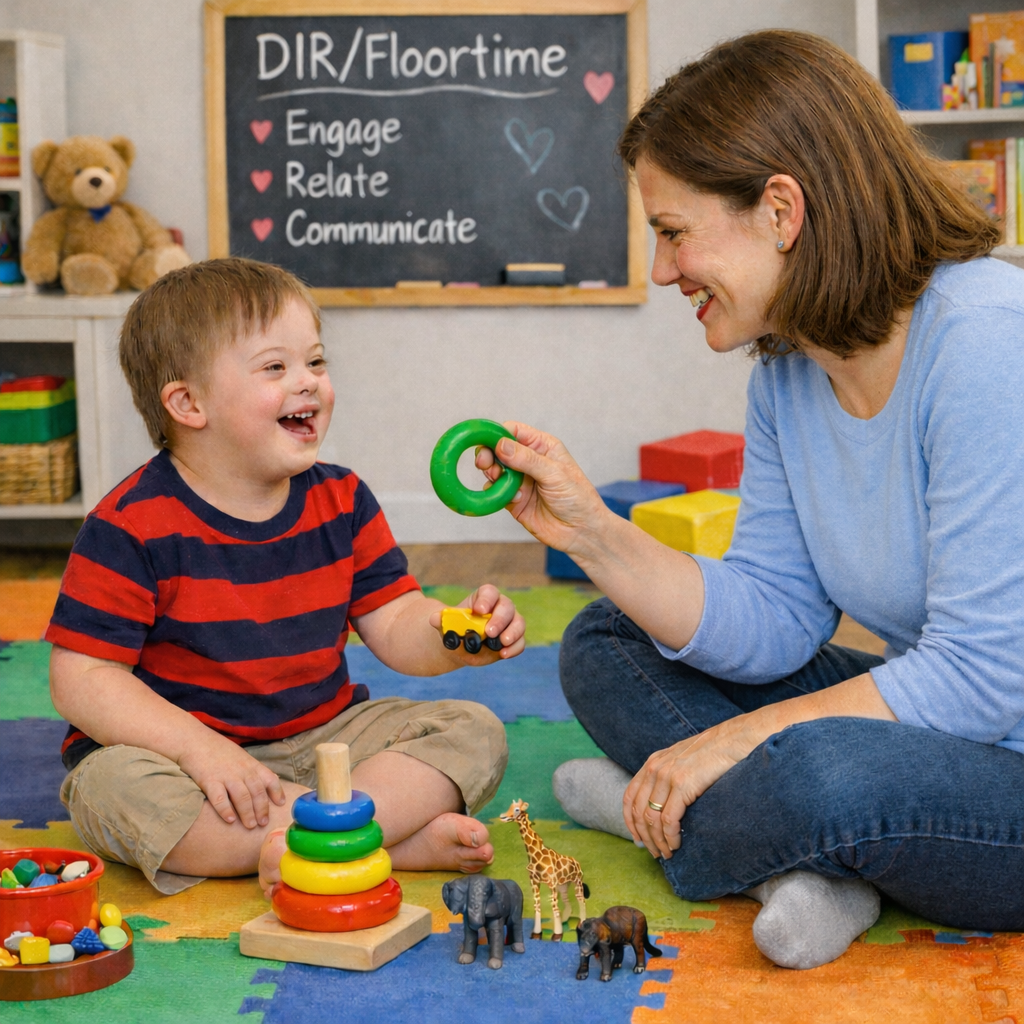
- Special Education
Supporting Children with Down Syndrome in the Preschool Setting: Understanding Behavior Through the DIR Lens By: Ruchy Krel M.S.Ed., Floortime Specialist
- November 16, 2025
- 15 Min Read
Children with Down syndrome bring warmth, curiosity, and a unique learning profile to the preschool classroom. At Eis Laasois Preschool, we use the DIR (Developmental, Individual-difference, Relationship-based) approach to support each child’s growth. This model emphasizes that behavior is a form of communication, reflecting underlying needs rather than intentional misbehavior. When adults understand the “why” behind a child’s actions, we can respond in ways that build skills, strengthen relationships, and promote long-term developmental success.
Children with Down syndrome thrive when adults understand their behaviors as meaningful communication. The DIR approach allows us to see beyond the surface and respond to the child’s underlying needs. By prioritizing regulation, engagement, social emotional wellbeing, and implementing proactive sensory and social-emotional strategies, we create a resilient, supportive environment.
Understanding the root cause of the behavior allows the adult to respond intentionally rather than reactively. Children with Down syndrome may exhibit behaviors that stem from various sources such as:
· - Sensory modulation dysfunction, such as overstimulation, under stimulation, cravings, or fluctuating arousal.
· -Challenges in social regulation and engagement
· -Limited communication abilities, which may lead to frustration when needs cannot be expressed verbally.
· -Uncertainty about expectations and/or boundaries, especially in new routines or transitions.
· -Motor planning or problem-solving challenges which can contribute to avoidance behaviors or stress responses.
When a child becomes dysregulated, our immediate priority is safety -for the child, classmates, and the adults. Once safety is ensured, we focus on connection and calming support. A calm, steady and regulated adult helps the child regain a sense of control and regulation. Simple, clear language in a rhythmical cadence provides guidance without overwhelming the child further. During these moments, we often offer sensory supports, which may include movement, deep pressure, full body flexion, or access to a quiet space. Demonstrating gentle hands, showing how to join play, or guiding the use of a communication tool supports the child to rejoin the group. The goal is not punishment but restoring regulation and rebuilding connection so that the child should return to engagement and readiness to learn.
The most meaningful progress occurs when the causes of behavior are addressed proactively. Eis Laasois emphasizes preventive strategies that reduce dysregulation and support developmental growth. Children are most successful when their sensory, social-emotional, and communication needs are understood and addressed throughout the day. A sensory rich environment and clear and predicable routines help keep the child organized and ready to learn. Additionally, when children are provided with individualized sensory diets and classroom staff are present, regulated and engaging, negative behaviors can be prevented and limited. One of the most crucial supports for a child in a classroom, is the provision of secure and pleasurable relationships with the adults around them. When children view the adults as partners that are there to support them, they can utilize their relationships to work through difficult moments.
Finally, a collaborative team approach is most effective when parents, teachers and therapists work together. This will reinforce shared strategies to help the children be their best happy and regulated selves.
Read more articles
Therapeutic Nutrition to Optimize Regulation, Development and Cognition
- 02/17/2026
- 15 Min Read
Supporting Children with Down Syndrome in the Preschool Setting: Understanding Behavior Through the DIR Lens By: Ruchy Krel M.S.Ed., Floortime Specialist
- 11/16/2025
- 15 Min Read
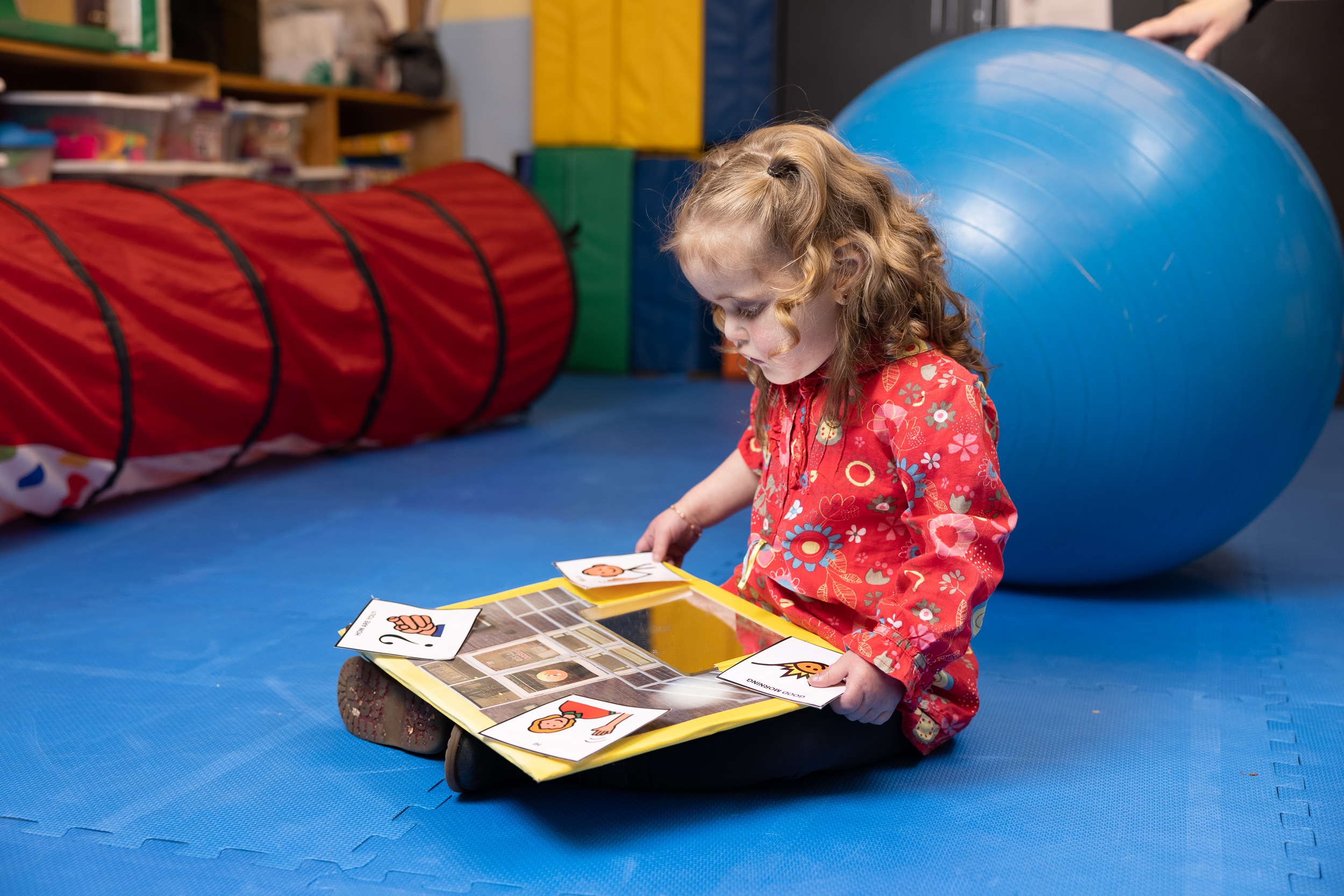
Augmentative and Alternative Communication at Eis Laasois By: Devora Szanzer, M.S, SLP-CCC, C/NDT
- 02/03/2025
- 15 Min Read